

AI-Powered Life coach and Personalized Journeys
Level SuperMind | UX Designer | Mobile App | Feb 2024 – Apr 2025
I led a two-month initiative at Level SuperMind to evolve a basic chatbot into a personalized AI Coach that guides users through daily goal-based journeys across career, relationships, health, finance, and self-growth.
The solution delivers curated meditations, journaling, workouts, and affirmations in a structured, easy-to-follow format—helping users progress toward their goals with clarity and confidence. I applied AI-UX best practices to ensure timely feature introduction, adaptive check-ins, and a tone that fosters trust and motivation—building a scalable foundation for future AI-powered experiences.
Background
Level SuperMind housed vast content and a basic chatbot that suggested one-off activities. But users felt overwhelmed by choice and lacked ongoing guidance.
“I love the resources, but I have no clue where to start or what to do next.”
— User interview
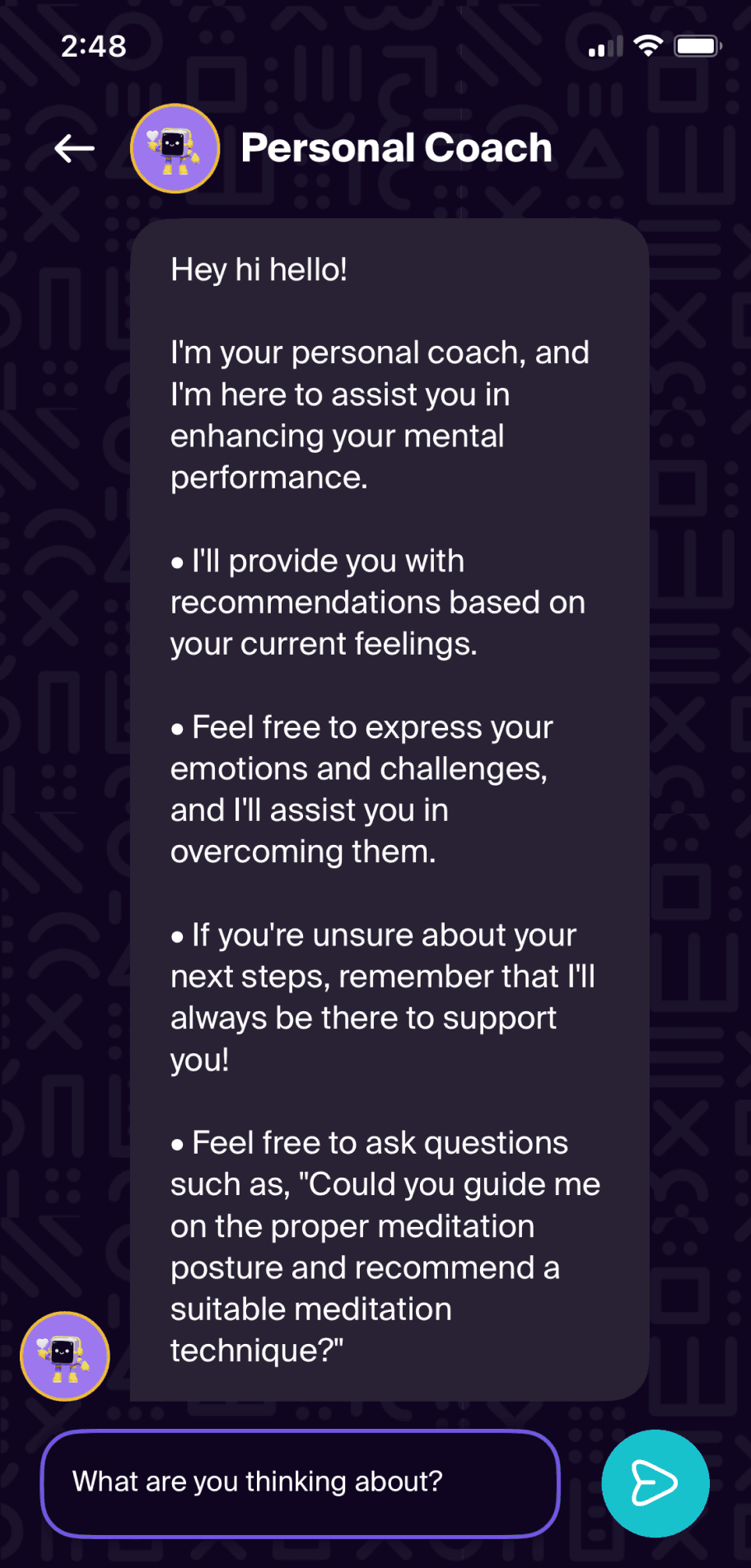

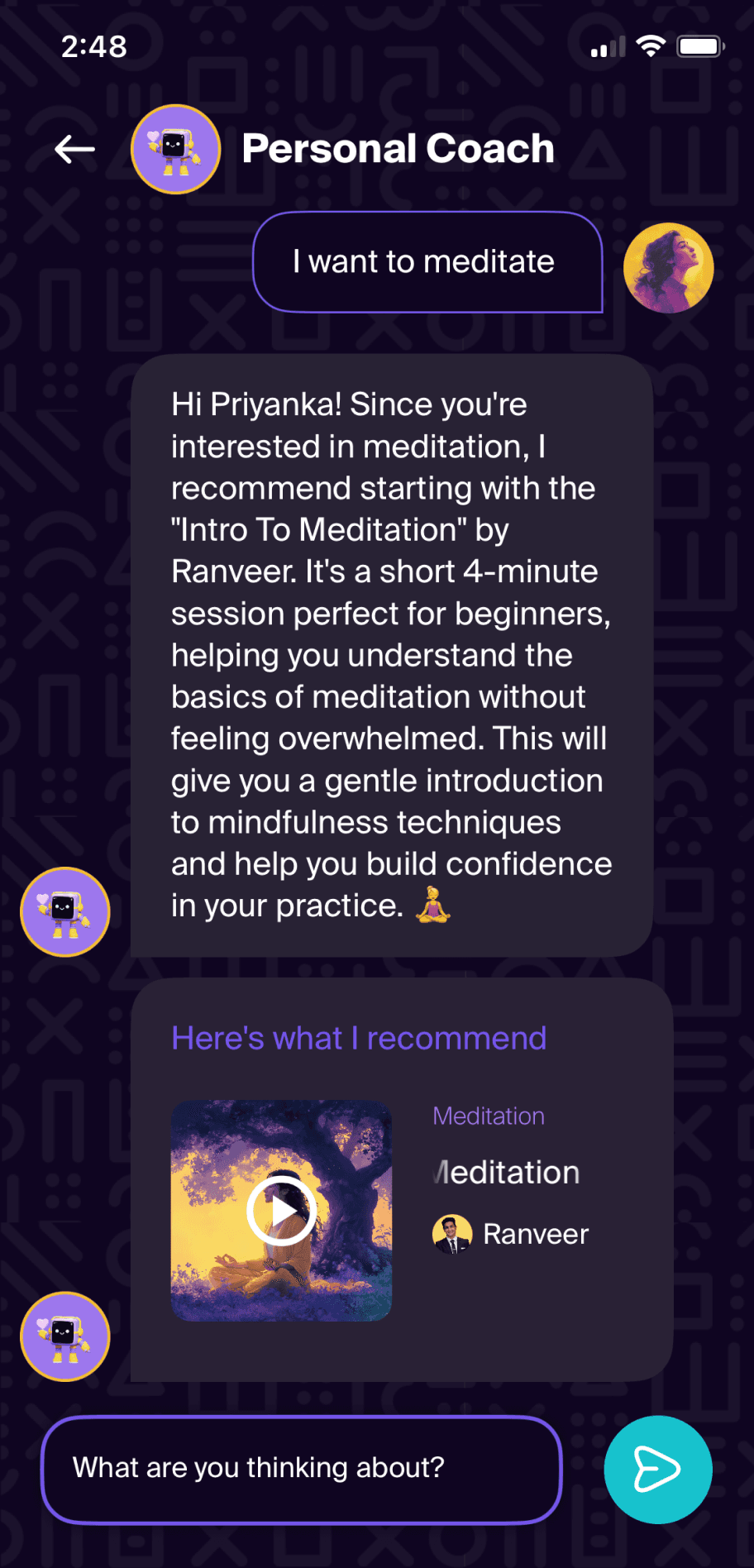

Image: Old Chatbot Interface
Problem Statement
How might we transform our chatbot into an end-to-end AI life coach that anticipates needs, builds trust, and guides users through a cohesive journey?
Early tests showed:
Information and feature overload for users
Chatbot suggestions were too generic, not aligned to user context- they Lacked emotional connection
Feedback cycles were missing—users wanted time to time check-ins, not a one-and-done tip
Goals and Strategy
To solve for the lack of contextual relevance, emotional connection, and feedback loops, we set out to transform the generic chatbot into a scalable, emotionally intelligent AI Coach by:
Boosting retention and engagement through structured, goal-based life journeys
Building user trust via emotionally resonant AI interactions and adaptive milestone check-ins
Creating a modular, scalable system by repurposing high-performing features like “Journeys” to reduce dev effort and accelerate future expansion
Six Key Design and Product Decisions:
From Random Chatbot Tips To AI-Powered Life Coach
We reimagined the chatbot as an AI Life Coach that adapts to individual goals and states—offering structured journeys, emotional check-ins, and meaningful guidance tailored to real-life needs.
1. Strategic Timing for Launch ✨
Instead of revealing journeys at sign-up, we triggered them only after users completed their first activity. This small success built confidence and made the next step feel like a reward, not another task—resulting in higher engagement at entry.
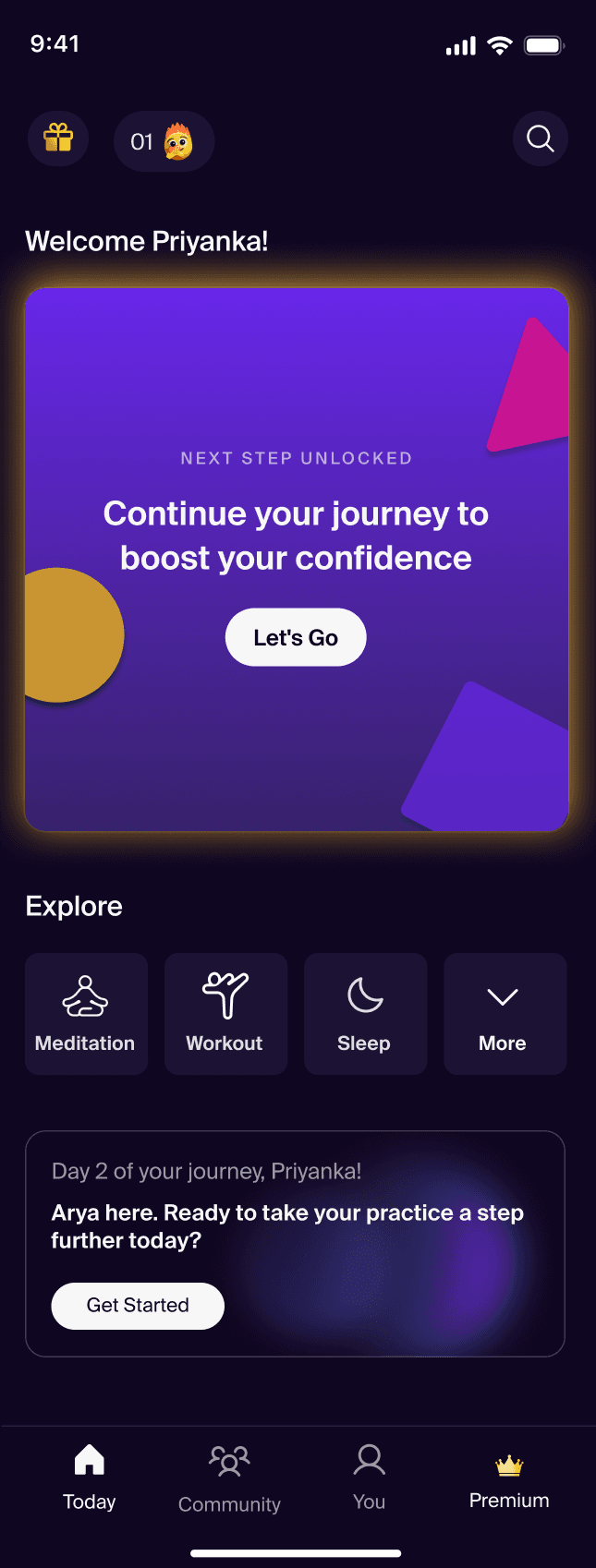
After first activity
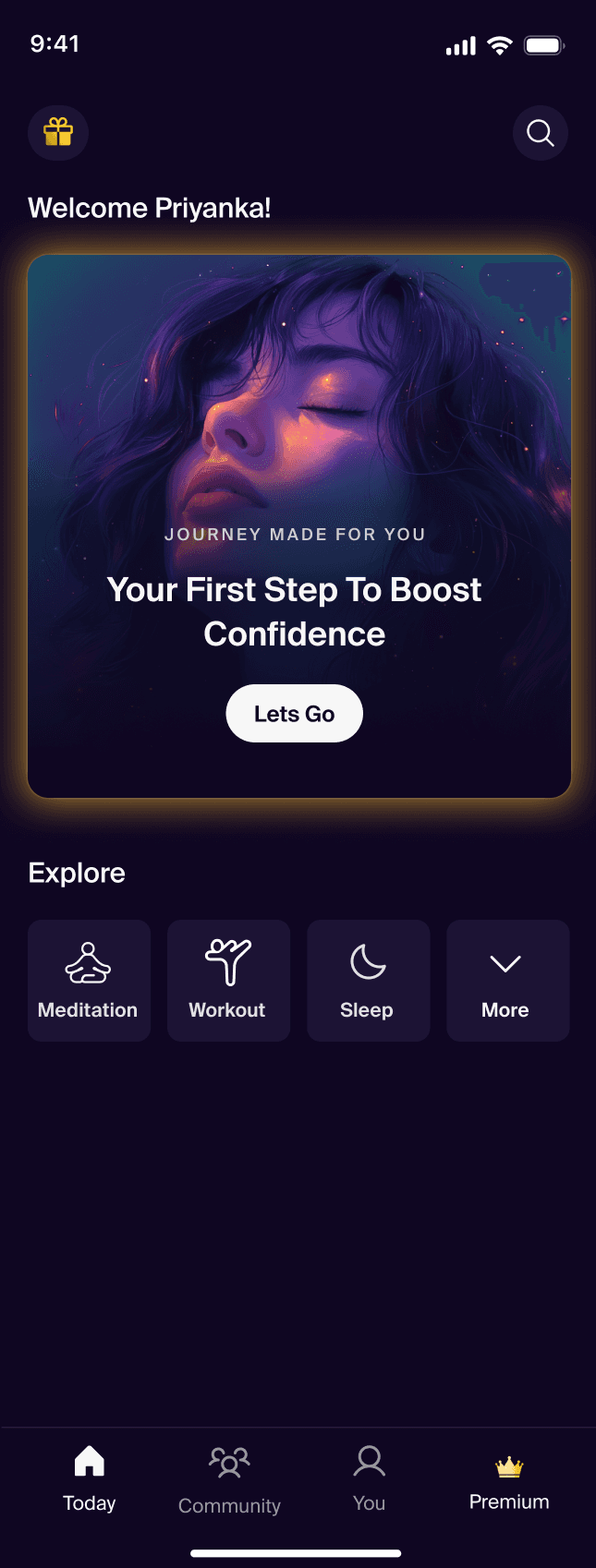
With no activity
Image: AI Life Coach introduction after first activity
2. MVP for Personalized flows based on life goals 🎯
Expanded the AI Coach's visibility by replacing the floating chatbot button with a prominent Home screen banner—enhancing perceived value and enabling dynamic, context-aware prompts to guide users into their journey.
Users chose a life area (Career, Health, etc.) and answered 3 lightweight prompts. The AI then generated a 7-day personalized plan.
We scoped the MVP to 7 days (vs. a full 21/30-day flow) to reduce time-to-launch and validate value early. The journey was built using modular content blocks, allowing rapid expansion into longer formats later—without redesign.
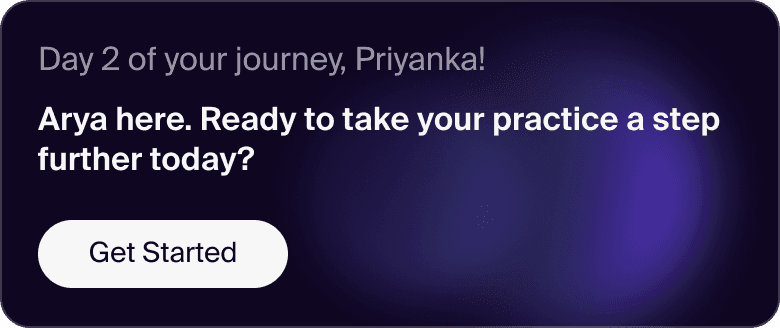

Personal
Coach
Floating button of Chatbot
New AI Coach Design
Image: Chatbot to AI Coach design change
Example Flow for ‘career’ aspect of life
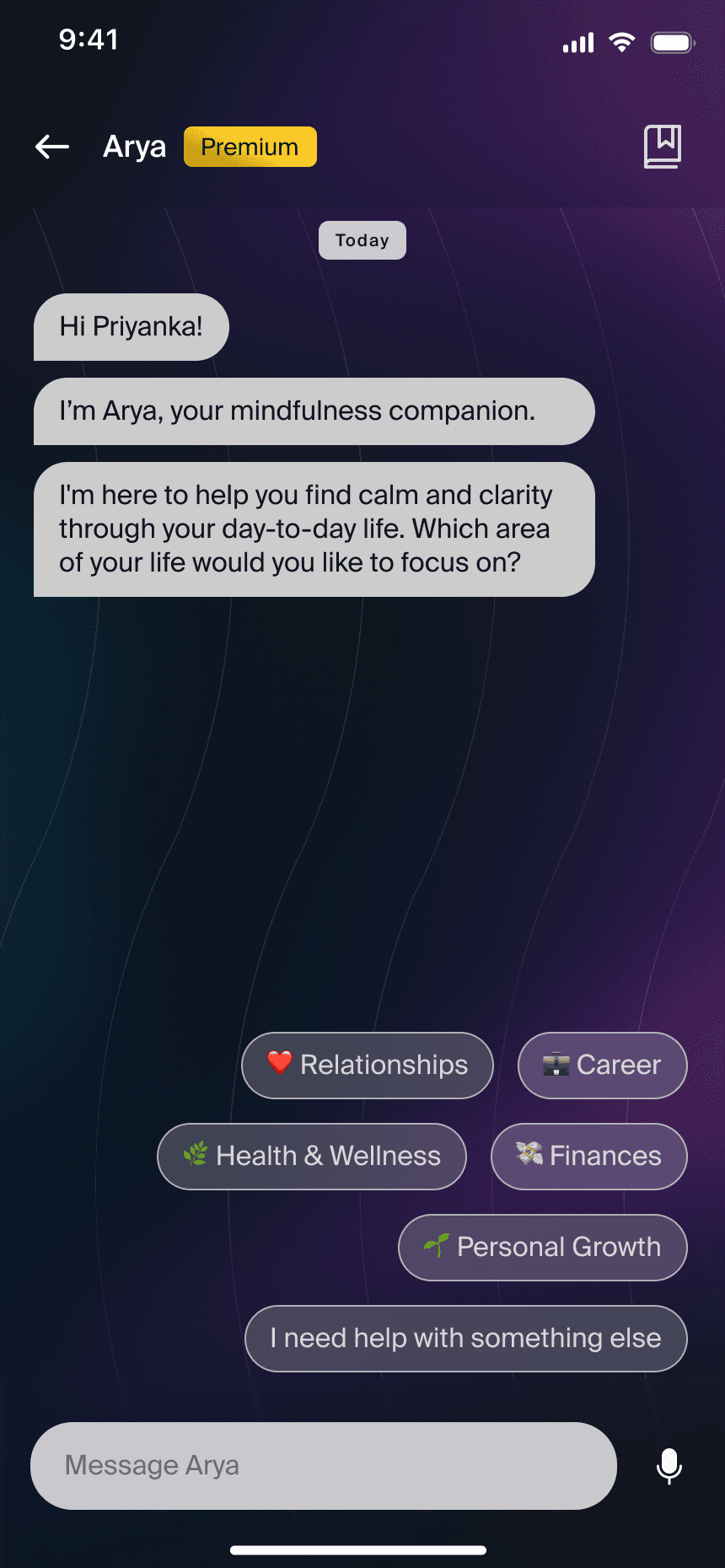
AI Life Coach: Arya
Image: Example user flow of AI life coach guidance
3. Reusing the Existing Journey System 🚀
Rather than building from scratch, we adapted the existing “Journey” feature—already proven effective. The AI generated multi-activity daily plans (e.g., meditation + journaling) and directed users to this flow. This reduced engineering overhead while aligning new capabilities with familiar UX patterns.
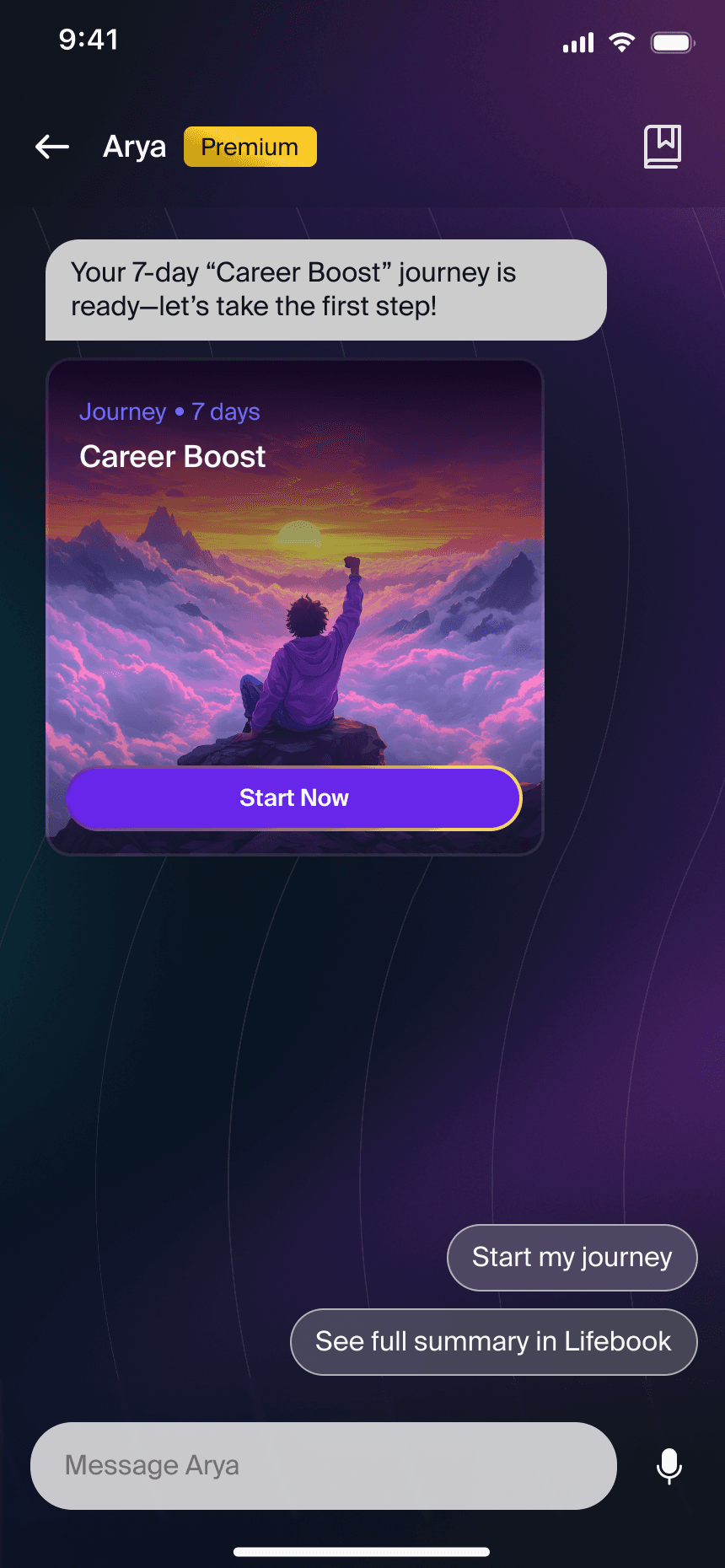
AI Coach
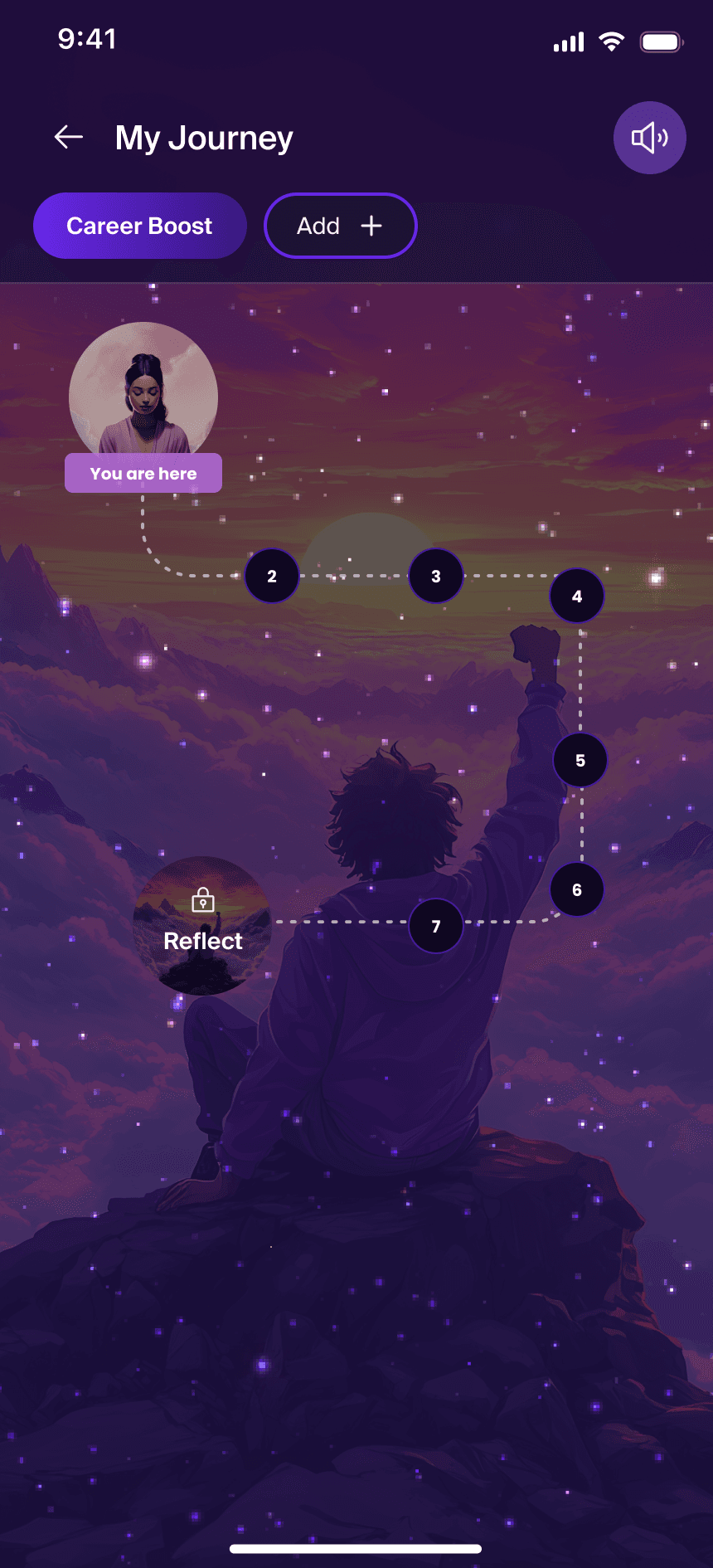
Modified Journey
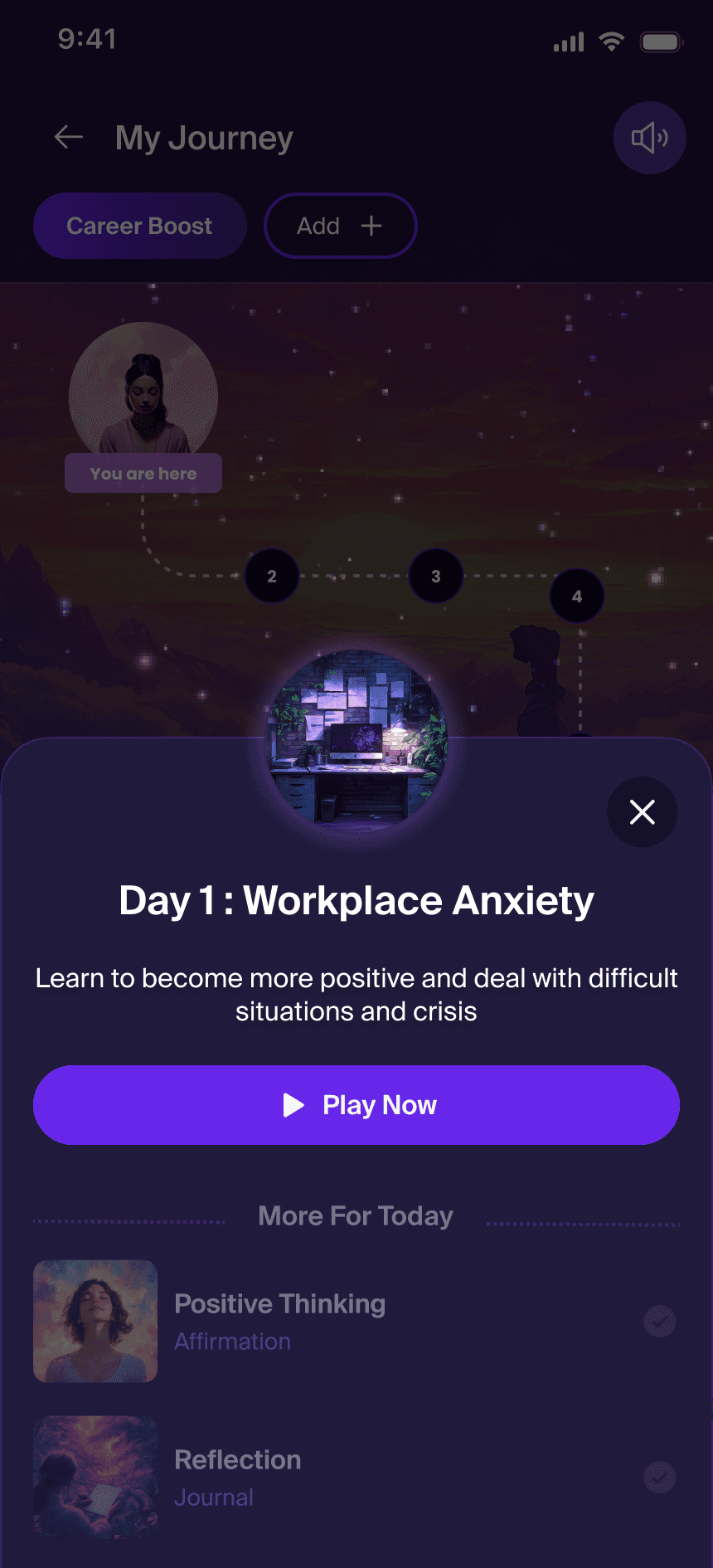
Activities of the day
Image: Reusing and Modifying “Journey” feature
4. Adapting dynamically through sentiment check-ins 💬
We built milestone-based touchpoints (Day 3 and Day 7) to gather sentiment, helping the AI adjust tone, pacing, or switch paths. These flexible pivots helped users feel guided rather than boxed into a rigid plan.
Strategic CTAs: Engaging nudges like “You’ve completed 5 days of your career journey! How are you feeling?” helped sustain momentum, build anticipation, and deepen emotional engagement.
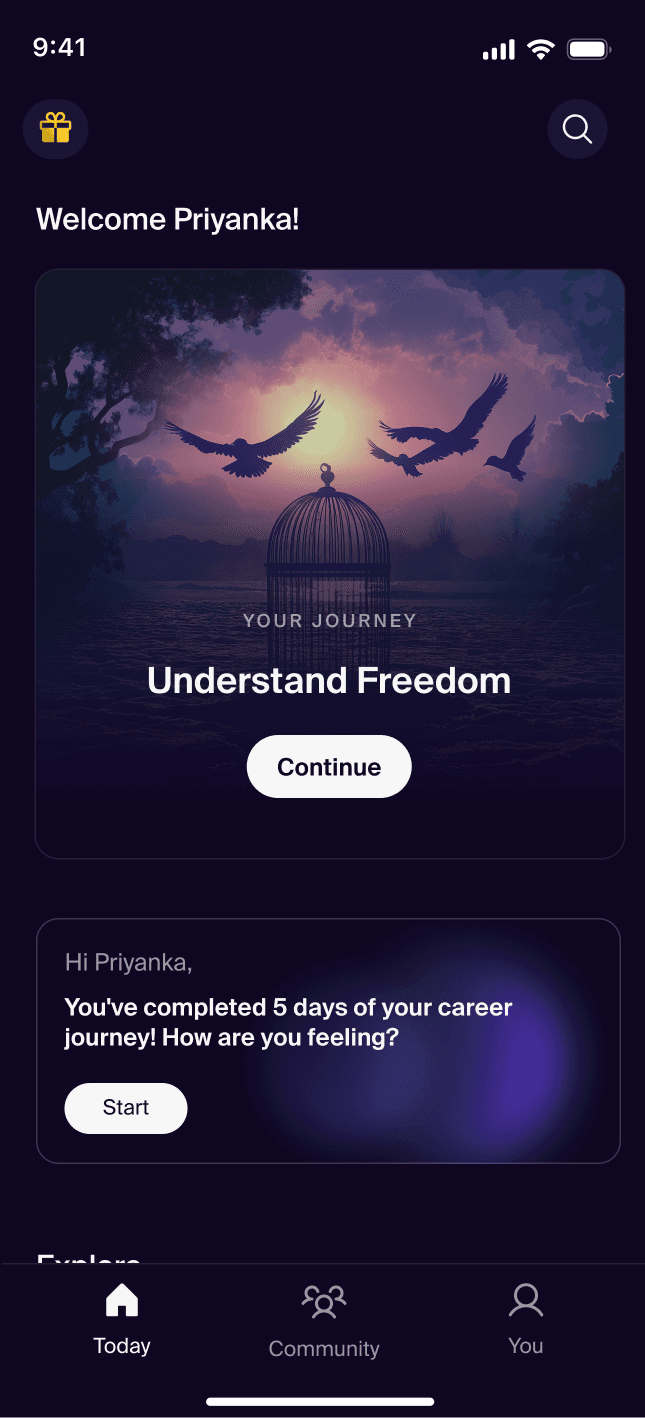
Check-in
Strategic CTAs
Priyanka, You've completed 5 days of your career journey! That's a great accomplishment. How are you feeling about your progress?
Priyanka, Ready for Day 6? Let’s take your progress one step further.
Reflect back before you move ahead—what’s one insight from this week?
Congratulations, Priyanka!
You've completed the Career Boost journey. How did it go?
Image: Dynamic Checkins to adapt user suggestions
5. UX Tone: Comforting, Not Robotic ❤️
To humanize the AI coach, we crafted a warm, supportive tone in both copy and interaction design. Every prompt was written to feel gentle and affirming—building emotional trust with the user.
How are you feeling today?
I'm here to listen to whatever's on your mind. Share your thoughts, emotions, or challenges, and we'll work through them together.
Hey there—ready for today’s step? You’ve got this!
Oops! Let’s pause and try something simpler.
That's wonderful to hear! I'm delighted that you’re seeing positive changes.
Could you share what helped you the most?
Image: Example prompts of UX Tone
6. Scalable System Thinking 📈
We laid the foundation for a modular AI guidance system by repurposing existing features—meditations, journaling, affirmations—into structured content blocks. These building blocks made it easy to scale journeys across life areas and extend into new contexts with minimal overhead.
The AI Life Coach was also surfaced contextually across the app:
After a completed activity
From the home screen and inner pages
As part of key nudges tied to user goals
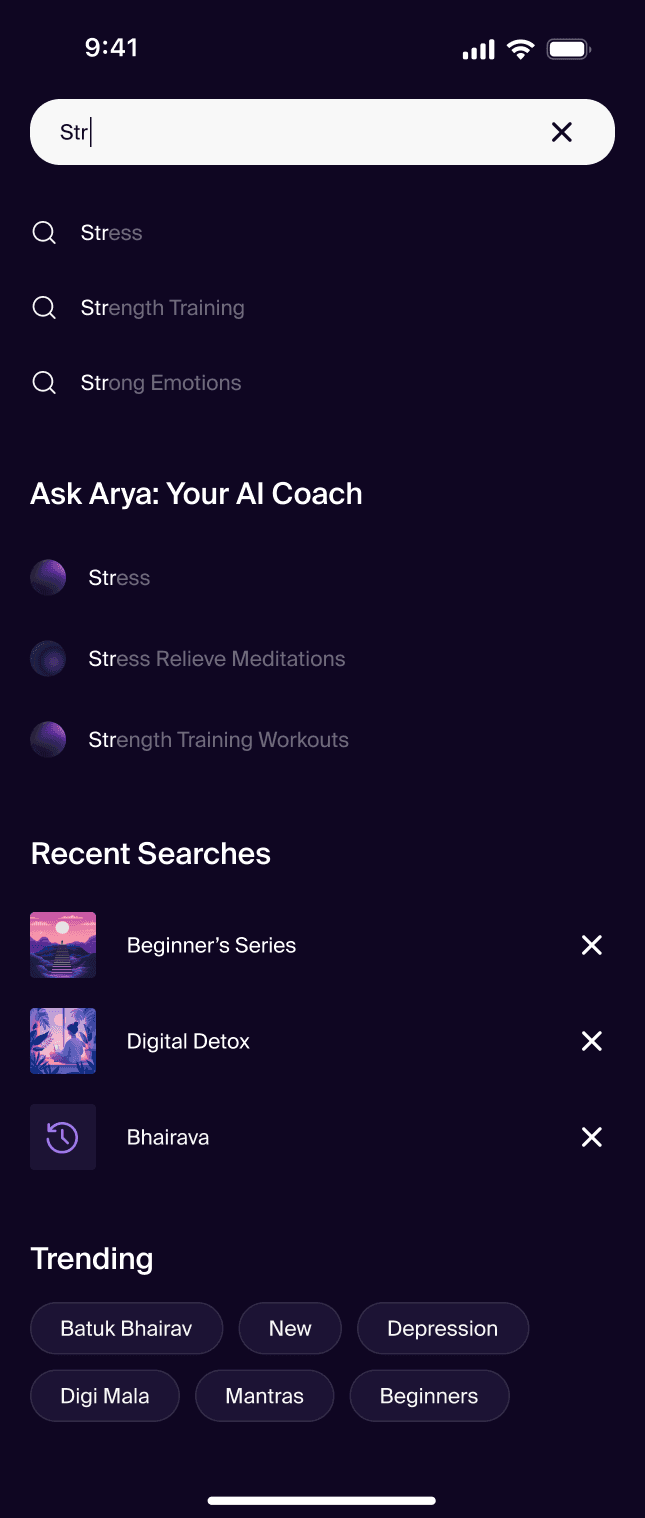
Search Page
Browsing without starting activity
Image: AI Coach integration throughout the app
Outcomes
NPS improved from 50 → 65
in closed-group testing, showing a meaningful boost in user satisfaction and user guidance
Key product KPIs met
(AI adoption, retention, habit formation) without adding friction or cognitive overload
65% of users said the experience “felt guided”
indicating emotional resonance and clarity in journey design
~30% faster design-to-dev handoff
enabled by a modular, reusable component system
Reflections
Modular thinking paid off – Starting with flexible, reusable blocks helped us move faster and scale smarter.
Emotions drive engagement – Small touches like tone, timing, and check-ins made the AI coach feel more human and trustworthy.
AI needs thoughtful framing – The value didn’t come from AI alone, but from how we shaped the experience around it.